
Hi, I’m Rick Richey. I help personal trainers take control, grow their businesses, and thrive, backed by 20+ years of real-world experience.
A practical breakdown of costs, trade-offs, and what actually works for independent trainers in New York City.
If you’re trying to rent gym space in NYC as a personal trainer, you’re usually not looking for general advice.
You’re trying to figure out something practical:
Where can I actually run my sessions—and what’s it going to cost me to do it properly?
For most independent personal trainers in NYC, this question comes up at a specific point:
- You’ve outgrown the constraints of a commercial gym in places like Equinox or Crunch
- You’re tired of negotiating for space on a crowded floor in Midtown or the Upper West Side
- Or you’re starting to think about running small groups instead of just 1-to-1 sessions
At that point, the idea of “renting space” seems straightforward.
Find a studio. Pay a fee. Run your sessions.
But in practice, it’s rarely that simple.
Across the city—from boutique studios in SoHo and Flatiron to smaller training spaces in Brooklyn—most facilities operate on some variation of hourly rental, monthly sublease, or a revenue split model.
On paper, those options look comparable.
In reality, they behave very differently once you’re trying to run sessions consistently week after week.
That’s where most coaches get caught out.
In practice, most trainers don’t realise this until they’ve already committed to a setup that doesn’t quite work.
A space that looks affordable on paper can become expensive once you factor in limited peak-hour availability, shared equipment, or the inability to run sessions at the times your clients actually want.
And a model that feels flexible at the start can quickly become restrictive if you’re trying to build something more structured—especially if you’re moving toward group training.
So rather than just listing prices, this guide breaks down:
- What gym and studio space actually costs in NYC
- The three main ways trainers pay for space
- And what those options really look like once you’re operating inside them
If you’re serious about building a coaching business—not just picking up a few extra sessions—this is the context you need before making a decision.
And if you’re still unsure whether you even need your own setup, it’s worth understanding when control over space actually becomes necessary.
Table of Contents
What does it cost to rent gym space in NYC as a personal trainer?
The cost of renting gym or studio space in New York City typically falls into three categories:
- Hourly rental: $20–$80 per hour depending on location and facility
- Monthly rental or sublease: $800–$3,000+ per month for dedicated access
- Revenue split: 30–60% of session revenue paid to the gym
However, the actual cost depends less on the pricing model and more on how the space is used.
Factors like schedule availability, consistency of access, and the ability to run group sessions can significantly affect the real cost over time.
Most independent trainers find that lower-cost options become restrictive as they try to scale, while higher-control environments allow for more predictable growth.
The 3 Ways to Rent Gym Space in NYC as a Personal Trainer
In New York City, most independent trainers end up operating within one of three models.
They’re not always labelled clearly—but in practice, nearly every option falls into one of these categories.
1. Hourly Gym or Studio Rental
This is the most flexible option.
You book space by the hour and pay only for the time you use.
In NYC, this typically ranges from:
- $20 to $80 per hour
- Depending on the facility, location, and time of day
You’ll find this model in:
- Boutique studios in areas like SoHo or Flatiron
- Smaller independent training spaces
- Multi-use studios offering off-peak availability
It’s often the starting point for trainers moving toward independence. It’s also where many trainers stay longer than they intended—because the next step isn’t always clear.
2. Monthly Rental or Sublease
Instead of paying hourly, you rent space on a recurring basis.
This might mean:
- Fixed weekly time blocks
- Or a monthly agreement for regular access
Typical costs in NYC:
- Around $800 to $3,000+ per month
This is more common in:
- Brooklyn-based studios
- Independent training facilities
- Smaller private gyms offering subleases
It offers more stability—but comes with fixed overhead.
3. Revenue Split Inside a Commercial Gym
Rather than paying for space directly, you give the gym a percentage of your session revenue.
This is common in:
- Larger commercial gyms across Manhattan
- Franchise-style facilities
- High-end gyms like Equinox or similar setups
Typical splits:
- 30% to 60% of what you charge
This model lowers upfront risk—but limits control and margins.
Why These Models Matter
At first glance, these look like three different pricing options.
In practice, they represent three very different ways of running your business.
And that difference becomes more important as you try to:
- Build consistency
- Improve client experience
- Move into group training
The key mistake most trainers make at this stage is treating this as a pricing decision—when it’s actually something more fundamental.
The Real Decision: Cost vs Control
At this stage, most trainers treat this as a pricing decision.
Hourly rates, monthly rent, revenue splits.
Which option is cheapest. Which feels manageable. Which carries the least risk.
But in practice, that’s not the decision that determines whether your setup works.
The real decision is this:
Are you choosing space based on cost—or based on how you want your business to operate?
Because those two approaches lead to very different outcomes.
If You Optimise for Cost
You’ll typically gravitate toward:
- Hourly rentals
- Revenue split arrangements
On the surface, this makes sense.
- Lower upfront commitment
- More flexibility
- Less financial pressure
But the trade-off is control.
Your schedule depends on availability.
Your sessions adapt to the space.
Your ability to grow is tied to external constraints.
It works—up to a point.
If You Optimise for Control
You start to prioritise different things:
- Reliable access to the same time slots
- A consistent environment for your clients
- The ability to plan your schedule in advance
You’re no longer just finding somewhere to train.
You’re choosing a setup that supports how you want to run your business.
That usually means:
- Accepting more structure
- Taking on a different type of commitment
- Thinking beyond short-term flexibility
Why This Distinction Matters
Both approaches can work.
But they don’t lead to the same type of business.
When you optimise for cost:
- You stay flexible—but often inconsistent
- You stay busy—but not always structured
When you optimise for control:
- Your schedule stabilises
- Your client experience becomes repeatable
- Your business becomes easier to manage and grow
Where Most Trainers Get Caught
The problem isn’t choosing one or the other.
It’s trying to build a structured coaching business inside a setup that was chosen purely for cost.
That’s where the friction shows up:
- Inconsistent schedules
- Disrupted sessions
- Limited ability to scale
And over time, those constraints become harder to work around.
Bringing It Back to the Decision
Before you compare prices any further, it’s worth being clear on one thing:
Are you looking for the cheapest way to run sessions—or the most reliable way to run your business?
Because once that’s clear, the right option tends to become a lot more obvious.
Gym Space Options in NYC: Cost vs Control vs Real-World Constraints
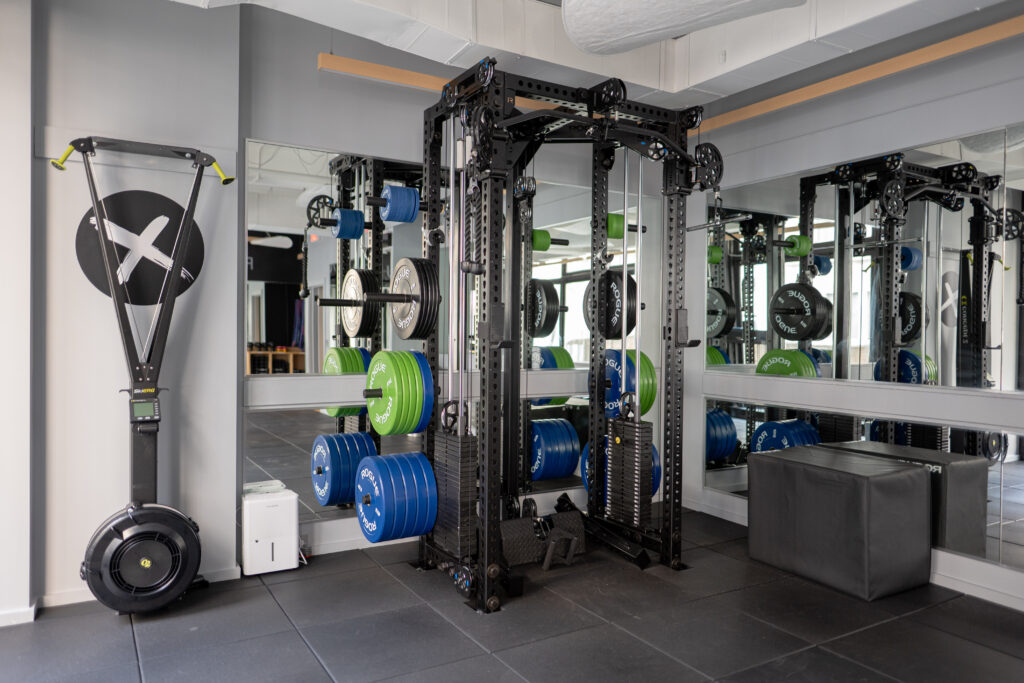
These are the four models most independent trainers end up choosing between in NYC—whether they realise it or not.
| Model | Typical Cost (NYC) | Control Over Schedule | Environment Consistency | Scalability for Groups | NYC Constraint (What Actually Limits You) |
| Hourly Rental | $20–$80/hour | Low | Low | Low | Peak-hour access (6–9am, 5–8pm) is inconsistent or unavailable |
| Monthly Sublease | $800–$3,000+/month | Medium | Medium | Medium | Paying for unused time if client volume fluctuates |
| Revenue Split (Commercial Gym) | 30–60% of revenue | Low | Low | Low | Floor access and rules limit how you can run sessions |
| Purpose-Built Training Environment | Structured pricing (typically membership or access-based, not hourly or rent) | High | High | High | Requires commitment to a consistent coaching model |
Most trainers focus on the cost column first. In NYC, the deciding factor is usually the final column—what actually limits your ability to run sessions consistently.
To see how this plays out in practice, it helps to look at what these setups actually feel like week to week.
What This Looks Like in Practice
To make this concrete, here are three typical setups you’ll see across NYC—and how they tend to play out once you’re actually running sessions.
Scenario 1 — Hourly Rental in Midtown
You book a space at $35/hour and plan to run early morning and evening sessions.
On paper, it works:
- Low upfront cost
- Flexible scheduling
In practice:
- 6–9am and 5–8pm slots are inconsistent or already taken
- You end up adjusting your schedule around availability, not client demand
- Some weeks run smoothly; others require constant rescheduling
What happens over time:
You spend more energy coordinating logistics than coaching, and it becomes difficult to build a consistent client experience.
Scenario 2 — Subleasing a Studio in Brooklyn
You agree to a $1,500/month sublease for dedicated hours in a smaller studio.
On paper:
- More control
- A stable base to work from
In practice:
- You need to fill enough sessions to justify the fixed cost
- If client volume dips—even temporarily—you still carry the overhead
- The space may not fully support how you want to run sessions
What happens over time:
The pressure shifts from “finding space” to “making the numbers work every month,” regardless of fluctuations in demand.
Scenario 3 — Training Inside a Commercial Gym (Revenue Split)
You operate inside a larger gym taking a 40–50% split.
On paper:
- No rent
- Built-in foot traffic
In practice:
- You don’t control the environment
- Running structured sessions—especially groups—is limited or restricted
- Your margins are capped, regardless of efficiency
What happens over time:
You stay busy, but your business doesn’t become more predictable or scalable.
The Pattern Most Coaches Miss
Each of these models can work at a certain stage.
But as soon as you try to:
- Run sessions consistently
- Deliver a repeatable client experience
- Or move into group training
The limitation isn’t cost—it’s control.
And in NYC, where space is limited and demand is high, that limitation shows up quickly.
This is where the idea of “cheap space” starts to break down—and where the real costs begin to show up.
What Cheap Gym Space in NYC Actually Costs You
At this point, it’s easy to focus on the headline numbers:
- $30/hour feels manageable
- $1,500/month feels like a step up
- A revenue split seems low-risk
But in NYC, the real cost of a training space isn’t the number you pay.
In New York, securing suitable training space has become increasingly competitive, with limited availability and rising commercial rents affecting fitness operators across the city.
It’s what that setup allows—or prevents—you from doing consistently.
1. Inconsistent Scheduling = Lost Revenue
If you can’t reliably secure the same time slots each week, you don’t just lose convenience—you lose income.
Clients expect:
- The same time
- The same days
- The same experience
If your schedule shifts based on availability, retention becomes harder and referrals become less predictable.
In areas like Midtown and Flatiron, this becomes a daily constraint—especially during peak hours.
2. Uncontrolled Environment = Inconsistent Client Experience
When you don’t control the space:
- Equipment may not be available when you need it
- Layout can change session to session
- Other trainers or members affect flow and focus
From the client’s perspective, this creates inconsistency.
And inconsistency limits perceived value—especially if you’re trying to charge appropriately or introduce group sessions.
3. Fixed Costs Without Predictability
A monthly sublease gives you more control—but introduces a different pressure.
You’re now paying:
- Whether sessions are full or not
- Whether clients cancel or not
- Whether demand dips temporarily
In a city where schedules fluctuate, that can create unnecessary financial strain.
4. Models That Don’t Scale With You
Most low-cost options work at the beginning.
They start to break when you try to:
- Add more clients
- Run back-to-back sessions
- Introduce group training
You hit limits quickly:
- Space constraints
- Scheduling conflicts
- Operational friction
At that point, growth isn’t a marketing problem—it’s an environment problem.
This is also why many trainers start rethinking their model entirely—especially when they begin to look at how group training changes the economics.
The Shift Most Experienced Coaches Make
Early on, the question is:
“What’s the cheapest way to run sessions?”
Later, it becomes:
“What setup lets me run sessions consistently, professionally, and at scale?”
That shift is what separates:
- Trainers picking up sessions
from - Coaches building a structured business
Once that shift happens, the decision stops being about price—and starts being about how you want your business to operate.
What Serious Coaches Optimise For Instead
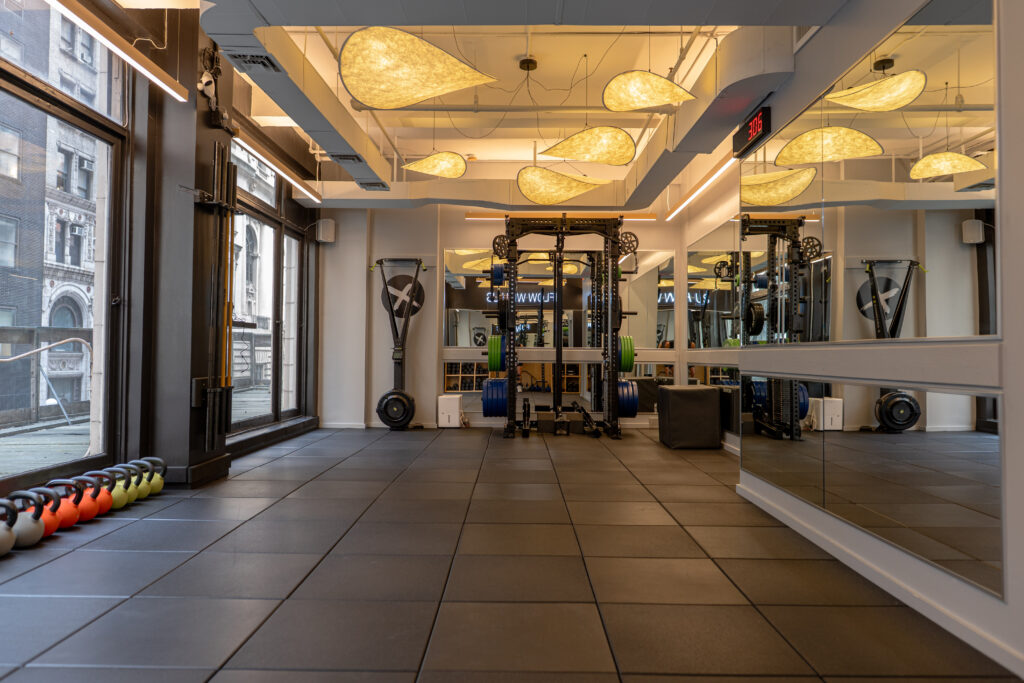
Once you’ve felt the limitations of inconsistent schedules, shared environments, or capped margins, the criteria tend to change.
It’s no longer about finding the cheapest option.
It becomes about choosing a setup that actually supports how you want to coach.
Across NYC, the coaches who build stable, repeatable businesses tend to optimise for three things.
1. Control Over Schedule
Not just access to space—but reliable, repeatable access.
That means:
- The same time slots each week
- The ability to run sessions back-to-back
- No dependency on last-minute availability
In a city where peak hours are limited and in high demand, this is often the difference between a full schedule and a fragmented one.
2. Consistency of Environment
Clients don’t experience your coaching in isolation.
They experience:
- The space
- The flow of the session
- The overall environment
When that changes from session to session, it creates friction—even if your coaching is strong.
Serious coaches prioritise environments where:
- Equipment is where it needs to be
- Sessions run the same way every time
- The experience feels deliberate, not improvised
That consistency supports:
- Better retention
- Clearer positioning
- A more professional client experience
3. Capacity to Scale Without Friction
The real test of any setup is what happens when you try to grow.
Can you:
- Add clients without reshuffling your entire schedule?
- Run small groups without compromising quality?
- Increase output without increasing complexity?
In many NYC setups, the answer is no.
You can stay busy—but you can’t become more efficient.
That’s the ceiling most trainers hit.
The Trade-Off That Becomes Clear
At the start, flexibility and low cost feel like advantages.
Over time, they often become constraints.
Because the question shifts from:
“Can I run sessions here?”
to:
“Can I run my business the way I want to here?”
That’s where the gap appears between:
- Spaces that simply allow you to train
and - Environments that actually support a structured coaching business
This is also why many trainers find themselves stuck—working hard, staying busy, but not quite building something that feels stable or scalable.
Key Insights: What Actually Determines Whether Your Setup Works
After working through the different models, costs, and trade-offs, a few patterns become clear.
1. Cost Is the Most Visible Factor—but Rarely the Most Important
Hourly rates and monthly rent are easy to compare.
What’s harder to see—and more important in practice—is how those options affect your ability to run sessions consistently.
Most trainers optimise for price first, then deal with the consequences later.
2. Every Model Works—Until You Try to Scale
Hourly rental, sublease, and revenue split models can all work at a certain stage.
The limitations only become obvious when you try to:
- Stabilise your schedule
- Improve the client experience
- Or introduce group training
That’s where most setups start to break down.
3. The Real Constraint in NYC Is Not Cost—It’s Control
In a city where space is limited and demand is high, access becomes the limiting factor.
Not just access to any space—but access at the right times, in a consistent environment, with enough freedom to run sessions properly.
That’s what ultimately determines whether your business feels stable or fragmented.
4. Most Friction Comes From a Mismatch Between Model and Ambition
Many trainers aren’t failing because of poor coaching or weak demand.
They’re trying to build a structured coaching business inside a model that wasn’t designed for it.
That mismatch creates:
- Scheduling friction
- Inconsistent client experience
- Difficulty scaling
5. The Shift Happens When You Stop Thinking Like a Trainer—and Start Thinking Like an Operator
Early decisions are often tactical:
- Where can I train?
- What’s the cheapest option?
Later decisions become structural:
- How do I want my business to run?
- What environment supports that?
That shift is what separates:
- Trainers managing sessions
from - Coaches building a repeatable business
Once you see these patterns clearly, it becomes easier to understand why so many trainers get stuck—and what needs to change to move forward.
If you want a deeper breakdown of how pricing works specifically for group setups, you can see how these numbers compare in practice.
Where Most NYC Trainers Get Stuck
For most independent trainers in New York City, the challenge isn’t understanding the options.
It’s getting stuck between them.
Not fully committed to a commercial gym—but not fully set up to run independently either.
You’ll see the same patterns play out across the city.
1. Operating Inside a Commercial Gym — With Limited Control
You’re busy.
You’ve built a client base.
But:
- You don’t control the space
- You can’t run sessions exactly how you want
- Group training is difficult to implement properly
So while things are working, they’re not evolving.
You’re effectively operating inside someone else’s system.
2. Piecing Together Hourly Rentals
You’ve taken the step toward independence.
You’re booking studios where you can.
But:
- Your schedule depends on availability
- Peak hours are inconsistent
- You’re constantly coordinating logistics
Some weeks feel smooth.
Others feel like you’re rebuilding your schedule from scratch.
3. Renting Space Without Enough Stability
You’ve committed to a monthly setup.
You have more control—but now you’re carrying overhead.
Which means:
- You need consistent volume
- You feel pressure to fill every slot
- Any dip in demand creates stress
The model works—but only if everything else stays stable.
The Common Thread
All three situations sit in the same place:
You’re capable of running a strong coaching business.
But your environment isn’t fully supporting it yet.
So progress feels slower than it should be.
More effort goes into:
- Managing logistics
- Working around constraints
- Maintaining consistency
Instead of:
- Refining your offer
- Improving client experience
- Growing in a structured way
Why This Matters
At a certain point, this isn’t a skills problem.
It’s not a marketing problem either.
It’s a structural one.
And until that structure changes, most trainers find themselves:
- Busy, but not scalable
- Independent, but not fully in control
- Growing, but with unnecessary friction
Once that becomes clear, the next question isn’t “which option is cheapest?”—it’s whether there’s a better way to structure the environment altogether.
A Better Way to Think About Your Setup
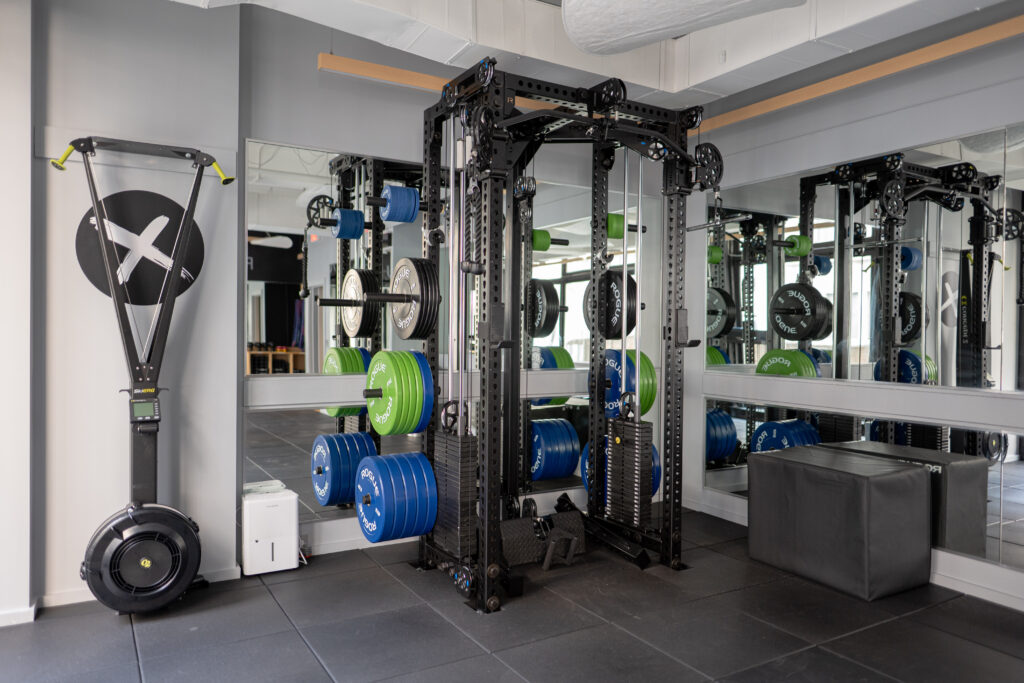
Once you see where most models start to break down, the decision becomes simpler.
It’s no longer about choosing between hourly, monthly, or revenue split.
It’s about choosing the type of environment you want to operate in.
Space vs Environment
Most options in NYC give you access to space.
Very few are designed as environments for independent coaches.
That difference shows up in how you work day to day.
In a space:
- You adapt your sessions to what’s available
- You work around other people’s schedules
- You manage constraints as they come up
In an environment:
- Your schedule is consistent
- Your sessions run the same way each time
- The setup supports how you coach, not the other way around
Why This Distinction Matters
If your goal is simply to run a few sessions each week, most options will work.
But if you’re trying to build something more structured—whether that’s:
- A consistent weekly schedule
- A more professional client experience
- Or a move toward group training
Then the environment becomes a key part of the decision.
Because it determines:
- How predictable your schedule is
- How consistent your sessions feel
- How easily your business can grow
What Changes When the Environment Is Right
When your setup supports how you want to operate:
- You spend less time managing logistics
- Your sessions feel smoother and more repeatable
- Clients experience consistency, which improves retention
- Growth becomes easier to manage
None of this comes from marketing or pricing.
It comes from having the right structure in place.
Bringing It Back to the Decision
Most of the friction trainers experience in NYC comes from trying to build a structured coaching business inside an unstructured setup.
Once that’s clear, the decision shifts.
It’s no longer:
“Where can I find space?”
It becomes:
“What kind of environment actually supports the business I’m trying to build?”
If you’re at that stage, the next step isn’t more comparison—it’s deciding whether your current setup is actually supporting you.
Is This the Stage You’re At?
Not every trainer in NYC needs to change their setup.
But if you’ve read this far, there’s a good chance you’re not at the beginning anymore.
This tends to apply when:
- You already have a base of clients
- You’re running sessions consistently—but not as smoothly as you’d like
- You’re thinking about adding group training, or improving how you run it
- You’re starting to feel the limitations of your current setup
At that point, the question isn’t whether you can keep making your current model work.
It’s whether it’s the right model to build on.
And for most coaches, that’s where the shift happens—from making do with available space to choosing an environment that actually supports the business they’re trying to build.
What to Do Next
If you want to see what a more structured training environment looks like in practice—and how independent coaches are running sessions without the usual constraints—you can explore how Group by ITS works here:
→ Explore Group by ITS
If you’re still weighing up your options, the next step is to compare what’s actually available across the city:
→ Best Gyms for Independent Personal Trainers in NYC (Honest Comparison)
FAQ: Renting Gym Space in NYC as a Personal Trainer
How much does it cost to rent gym space in NYC as a personal trainer?
In New York City, personal trainers typically pay for gym space in one of three ways: hourly rental, monthly rent, or a revenue split with the facility. Typical costs are around $20–$80 per hour for rental, $800–$3,000+ per month for sublease or fixed access, and 30–60% of session revenue under a split model. The real cost depends on how consistently you can use the space, as limited access and peak-hour restrictions often make lower-cost options more expensive over time.
Is it better to rent gym space or work on a revenue split in NYC?
Renting gym space is generally better for trainers with consistent clients, while revenue split models are more suitable at an earlier stage. Revenue splits reduce upfront risk but limit control and cap your margins, which makes long-term growth more difficult. Renting space typically allows for more predictable scheduling, greater control over how you run sessions, and improved profitability once your client base is stable.
Can personal trainers run group training in commercial gyms?
Personal trainers can run group sessions in some commercial gyms, but it is rarely effective or scalable in practice. Most facilities limit how much space you can use, restrict group-style formats, and prioritise general members over independent trainers. As a result, while one-to-one sessions are manageable, structured group training is often inconsistent and difficult to deliver at a high standard.
What is the cheapest way to rent gym space in NYC?
Hourly rental is usually the cheapest way to access gym space in NYC, with rates typically ranging from $20 to $80 per hour. However, this model often becomes more expensive in practice due to limited peak-hour access, inconsistent scheduling, and reduced control over the environment. For many trainers, what appears to be the lowest-cost option upfront is not the most sustainable over time.
How do independent trainers find gym space in NYC?
Independent trainers typically find gym space through boutique studios, sublease arrangements, or commercial gym partnerships. These options are widely available across NYC, but the challenge is not finding space—it is finding an environment that supports consistent and scalable coaching. Most trainers can access space relatively easily, but fewer find setups that work well long-term.
Do I need my own space to run group training in NYC?
You don’t need to own your own facility to run group training in NYC, but you do need consistent control over the environment. Effective group training requires reliable access to the same time slots, enough space to run structured sessions, and a setup that supports repeatable session flow. Without those elements, group training becomes difficult to deliver consistently and hard to scale.
How many clients do I need to cover gym rent in NYC?
The number of clients required depends on your pricing and the cost of your space, but consistency matters more than total volume. As a rough guide, a $1,500 per month space may require around 15–30 sessions per week to break even, depending on your rates. The key factor is how reliably you can fill your schedule, as inconsistent bookings make fixed costs harder to manage.
Is renting gym space worth it for personal trainers?
Renting gym space is worth it for trainers who have consistent demand and want more control over their business. It becomes particularly valuable when you are aiming to create a stable schedule, improve the client experience, or move into semi-private or group training. For early-stage trainers, lower-commitment models may be more appropriate, but renting becomes more effective as your business matures.
What should I look for in a gym space as a personal trainer?
The most important factors when choosing a gym space are schedule reliability, environment consistency, and the ability to scale. In practical terms, you should prioritise access to the same time slots each week, a setup that supports how you run sessions, and enough capacity to grow without constant restructuring. These factors tend to have a greater impact on your business than the headline price.
Why do so many trainers struggle after renting space?
Most trainers struggle after renting space because they choose based on cost rather than how the environment supports their business. This often leads to inconsistent scheduling, pressure to cover fixed costs, and difficulty scaling beyond one-to-one sessions. The underlying issue is structural—trying to build a consistent coaching business inside a setup that wasn’t designed for it.