
Hi, I’m Rick Richey. I help personal trainers take control, grow their businesses, and thrive, backed by 20+ years of real-world experience.
If you’re trying to find group training space in NYC, you’re probably not looking for a list of gyms.
You’re trying to figure out something more specific:
Where can I actually run structured group sessions—and have them work week after week?
For most personal trainers, this question comes up at a particular stage.
You’ve moved beyond one-to-one.
You’ve started experimenting with small groups.
And you’re beginning to realise that the environment matters more than you expected.
At that point, it’s easy to assume the solution is simple.
Find a bigger space.
Book a studio.
Run your sessions.
But in practice, most spaces in New York City aren’t set up for independent group training.
They’re built for:
- General gym usage
- Pre-structured classes
- Or individual sessions on a shared floor
And that difference shows up quickly once you try to run something consistent.
Sessions feel harder to organise.
Flow breaks down.
Scheduling becomes unpredictable.
In practice, most trainers don’t notice this until they’ve already tried to make a space work—and realised it doesn’t quite support what they’re doing.
So instead of listing “the best gyms,” this guide breaks down:
- The types of spaces available for group training in NYC
- How they actually function in practice
- And what matters if you’re trying to build something consistent and scalable
If you’re serious about running group training as part of your business—not just testing it—this is what you need to understand before choosing a space.
If you’re still working through the numbers, it’s worth understanding the cost of gym space in NYC before choosing a setup.
Table of Contents
What is the best group training space in NYC for personal trainers?
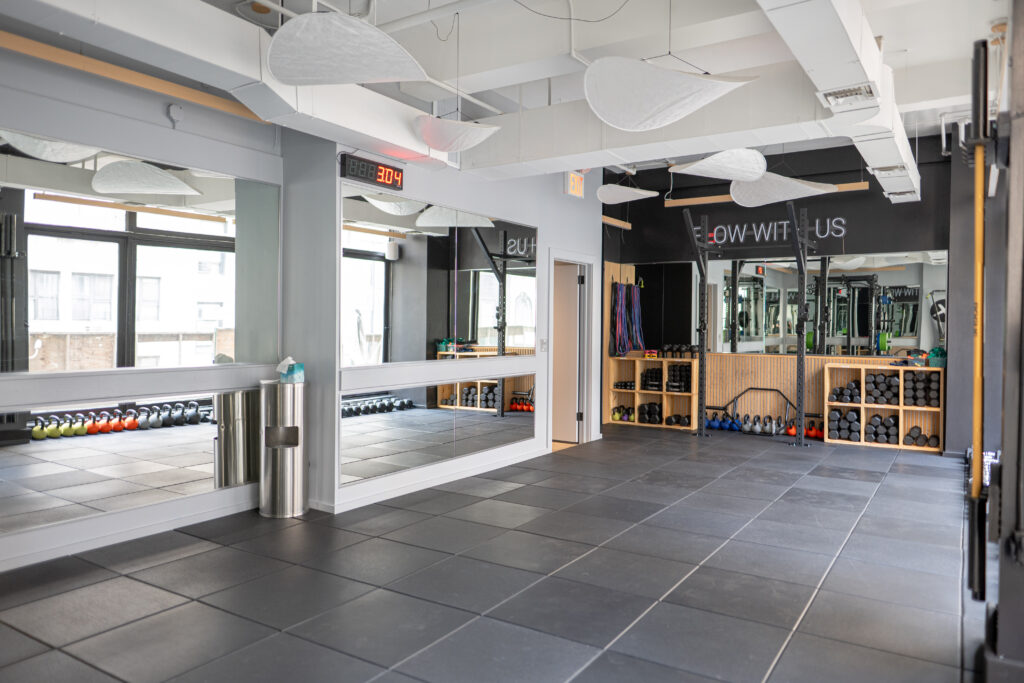
The best group training space in NYC for personal trainers depends on how you want to run your sessions, but most options fall into three categories: commercial gyms, boutique or franchise studios, and independent training facilities.
Commercial gyms offer access to space, but are not designed for structured group training run by independent coaches.
Boutique studios provide a more controlled environment, but typically require you to follow a pre-set class format rather than run your own system.
Independent training facilities tend to offer the highest level of control, allowing you to run your own sessions with consistency and scale.
In practice, the best option is the one that aligns with how you want to operate. If you’re simply looking for somewhere to train, most spaces will work.
If you’re trying to run structured group sessions consistently, the environment becomes a much more important factor.
To understand why these options behave so differently, it helps to break down the types of spaces personal trainers actually use for group training in NYC.
The 3 Types of Group Training Space in NYC
In New York City, most personal trainers running group sessions end up operating within one of three types of spaces.
They’re not always described this way, but in practice, nearly every option falls into one of these categories.
1. Commercial Gyms (Not Designed for Independent Groups)
These are the large, well-known facilities across the city—places like Equinox, Crunch, and similar chains.
They provide:
- Access to equipment
- A consistent physical space
- High foot traffic
But they’re not designed for independent trainers running structured group sessions.
In practice:
- Space is shared and unpredictable
- Group-style sessions are often restricted
- You’re working around general members and gym policies
You can train clients here, but running organised, repeatable group sessions becomes difficult.
Most trainers can make this work short-term, but it’s rarely a stable setup for group training.
2. Boutique or Franchise Studios (Pre-Structured Models)
These include studios like Barry’s, F45, Orangetheory, and similar concepts.
They offer:
- A well-designed training environment
- Clear structure and systems
- Consistent class formats
However, the key limitation is ownership.
In practice:
- You’re delivering someone else’s programming
- The format is fixed
- You don’t control how sessions are run
For trainers who want structure, this can work well.
But if your goal is to build your own group training model, these environments limit your flexibility.
3. Independent Group Training Facilities (Designed for Coaches)
This is a different category—spaces designed specifically for independent trainers running their own sessions.
They typically provide:
- Dedicated space for structured group training
- Consistent scheduling
- Freedom to run your own programming
In these environments, you’re not fitting into an existing system—you’re operating your own within a structured setup.
This is where group training becomes easier to standardise and scale.
Why These Categories Matter
At first glance, all three options look like “places to train.”
But they function very differently once you’re running sessions consistently.
The difference isn’t just about space—it’s about how much control you have over:
- Your schedule
- Your session structure
- Your ability to grow
The key mistake most trainers make is assuming these options are interchangeable—when in reality, they lead to very different outcomes.
The Real Decision: Running Sessions vs Running a System
At this stage, most trainers approach the decision as a question of space.
Which gym. Which studio. Which setup feels easiest to access.
But in practice, that’s not the decision that determines whether your group training works.
Most trainers don’t realise how different group training space in NYC can be until they try to run sessions consistently.
The real decision is this:
Are you trying to run sessions—or build a system you can repeat?
Because those two approaches lead to very different outcomes.
If you’re primarily working one-to-one, independent training space options in NYC often make more sense at this stage.
If You’re Focused on Running Sessions
You’ll usually choose whatever space is available.
That might mean:
- Booking studios when you can
- Working around gym availability
- Adjusting sessions based on the environment
On the surface, this feels flexible.
But the trade-off is consistency.
Your schedule moves.
Your session structure adapts.
Your experience changes from week to week.
It works—up to a point.
If You’re Focused on Building a System
You start to prioritise different things.
- Consistent access to the same time slots
- A repeatable session structure
- An environment that supports how you coach
You’re no longer just finding somewhere to train.
You’re choosing a setup that allows your sessions to run the same way every time.
That’s what makes group training:
- Easier to deliver
- Easier to manage
- Easier to scale
Why This Distinction Matters
Both approaches can work.
But they don’t lead to the same type of business.
When you focus on running sessions:
- You stay flexible—but inconsistent
- You stay active—but harder to scale
When you focus on building a system:
- Your schedule stabilises
- Your sessions become repeatable
- Your business becomes easier to grow
Where Most Trainers Get Caught
The problem isn’t choosing one or the other.
It’s trying to build a structured group training model inside an environment that wasn’t designed for it.
That’s where the friction shows up:
- Sessions that feel harder than they should
- Schedules that don’t hold
- Systems that don’t quite stick
Over time, those constraints become harder to work around.
Bringing It Back to the Decision
Before you compare specific gyms or studios, it’s worth being clear on one thing:
Are you looking for somewhere to run sessions—or somewhere that supports how you want to run them?
Because once that’s clear, the right option tends to become much easier to identify.
With that in mind, it becomes easier to compare these options side by side—and see where each one starts to break down.
Group Training Space Options in NYC: Control, Structure, and Scalability
These are the three types of spaces most personal trainers end up using for group training in NYC—whether they realise it or not.
| Model | Control Over Sessions | Programing Freedom | Client Ownership | Scalability for Groups | What Typically Breaks |
| Commercial Gyms | Low | Low | Low–Medium | Low | Space availability, restrictions on group formats |
| Boutique / Franchise Studios | Medium | Low | Low | Medium | Lack of flexibility, no ownership of system |
| Independent Group Training Facilities | High | High | High | High | Requires commitment to consistent structure |
Most trainers initially focus on access to space. In practice, what determines whether group training works is how much control you have over how sessions are run.
To see how this plays out in real situations, it helps to look at what these setups actually feel like once you’re running group sessions week after week.
What This Looks Like in Practice
To make this concrete, here are three typical setups you’ll see across NYC—and how they tend to play out once you’re actually running group sessions week after week.
Scenario 1 — Running Groups Inside a Commercial Gym
You’re operating inside a larger facility and trying to run small group sessions alongside general members.
On paper, it works:
- Access to equipment
- No need to secure your own space
- Low upfront commitment
In practice:
- You’re competing for space with members and other trainers
- Group-style sessions are limited or discouraged
- You’re constantly adjusting based on what’s available
What happens over time:
Sessions become harder to run consistently, and it’s difficult to create a repeatable structure that clients can rely on.
Scenario 2 — Working Inside a Boutique Studio Model
You’re coaching in a structured studio environment with an established class format.
On paper:
- High-quality setup
- Clear systems and flow
- Consistent client experience
In practice:
- You’re delivering someone else’s programming
- The structure is fixed
- You don’t control how sessions evolve
What happens over time:
You can deliver sessions effectively, but you’re not building your own system or business—you’re operating within someone else’s.
Scenario 3 — Running Independent Group Sessions in a Dedicated Environment
You have access to a space designed for independent group training, with consistent time slots and a controlled setup.
On paper:
- Full control over how sessions are run
- A consistent environment
- The ability to plan ahead
In practice:
- Sessions run the same way each week
- Scheduling becomes predictable
- You can refine and improve your system over time
What happens over time:
Group training becomes easier to manage, more consistent for clients, and more scalable as your business grows.
The Pattern Most Trainers Miss
Each of these setups can work at a certain stage.
But as soon as you try to:
- Run sessions consistently
- Deliver a repeatable experience
- Build something that scales
The limitation isn’t effort—it’s the environment.
And in NYC, where space is shared and demand is high, that limitation becomes obvious quickly.
This is where most trainers start to realise that not all group training spaces are created equal—and why choosing the right setup matters more than it first appears.
What Most Trainers Get Wrong About Group Training Space
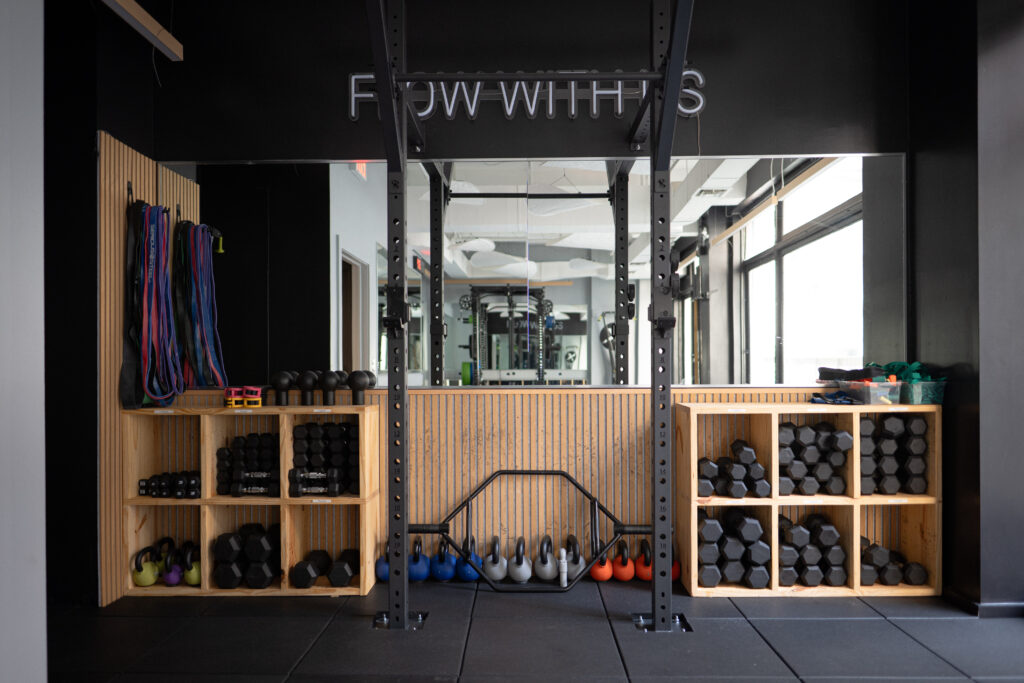
By the time trainers start looking for group training space in NYC, they usually have enough experience to know what they don’t want.
But there are still a few assumptions that tend to cause problems—especially when moving from one-to-one into group sessions.
1. Assuming Space Is Just Space
At first, it’s easy to think:
“As long as I have room, I can run my sessions.”
But group training depends on more than square footage.
You need:
- Flow between stations
- Predictable setup
- Enough consistency to run the same session week after week
Without that, sessions feel improvised—even if your coaching is strong.
2. Overestimating Flexibility
Flexibility sounds like an advantage.
Being able to book different times, use different spaces, and adjust week to week feels like freedom.
In practice, it often creates friction.
- Schedules become harder to maintain
- Clients experience inconsistency
- Sessions require more coordination than they should
What looks flexible at the start can quickly become unstable.
3. Underestimating the Importance of Structure
Group training isn’t just one-to-one coaching with more people.
It requires:
- Clear session design
- Repeatable formats
- A consistent environment
Without structure, it becomes harder to deliver quality at scale.
That’s where many setups fall short—not because of the coach, but because of the environment they’re working in.
4. Choosing Based on Convenience
A lot of decisions at this stage are driven by what’s easiest:
- Closest location
- Lowest cost
- Quickest access
Those factors matter—but they don’t determine whether your group training model works long term.
In practice, convenience often leads to compromises that become more noticeable over time.
In a market like New York—one of the most competitive fitness environments globally—those compromises tend to show up quickly.
The Common Thread
Most of these issues come back to the same point:
Trying to run structured group training inside a space that wasn’t designed for it.
That mismatch creates:
- Inconsistent sessions
- More effort than necessary
- Limited ability to scale
And over time, it becomes harder to build something stable.
Once you understand where these problems come from, it becomes much clearer what actually matters when choosing the right space.
What Serious Group Coaches Actually Need
Once you’ve seen where most setups fall short, the criteria start to shift.
It’s no longer about finding any space that works.
It becomes about choosing an environment that supports how you want to run group training.
Across NYC, the coaches who build consistent, scalable group models tend to prioritise four things.
1. Consistency of Schedule
Not just access to space—but reliable access to the same time slots every week.
That means:
- Sessions start and finish at the same times
- Clients know exactly when they’re training
- Your weekly structure doesn’t change
In a city where peak hours are limited, this is often the difference between a stable schedule and one that constantly shifts.
2. A Repeatable Session Environment
Group training depends on flow.
You need:
- Equipment set up in a predictable way
- Enough space to move between stations
- A layout that supports how you coach
When that changes from session to session, it creates friction—for both you and your clients.
A consistent environment makes sessions easier to deliver and easier to improve over time.
3. Control Over How You Coach
In many setups, you’re adapting to the space.
Serious coaches look for environments where:
- They control the session structure
- They can run their own programming
- They’re not restricted by external rules or formats
This allows you to refine your approach and build something that reflects how you actually want to coach.
4. Capacity to Scale Without Complexity
The real test of any setup is what happens when you try to grow.
Can you:
- Add more clients without reshuffling your schedule?
- Run multiple groups back-to-back?
- Increase output without increasing coordination?
In many NYC environments, the answer is no.
You can stay busy—but scaling becomes harder than it should be.
The Trade-Off That Becomes Clear
Early on, flexibility and easy access feel like advantages.
Over time, they often become constraints.
Because the question shifts from:
“Can I run sessions here?”
to:
“Can I run my group training the same way every week without friction?”
That’s where the gap appears between:
- Spaces that allow you to train
and - Environments that actually support a structured group model
When you look at it this way, it becomes easier to see why some setups work long term—and others start to break down as you grow.
Key Insights: What Actually Determines Whether Group Training Works
After comparing the different options and seeing how they play out in practice, a few patterns become clear.
1. Most Spaces Are Not Designed for Independent Group Training
Commercial gyms and boutique studios are built around their own priorities—general members or pre-structured classes.
Independent group coaching sits outside of that.
Which means most trainers are trying to make a space work for something it wasn’t designed to support.
2. The Limitation Isn’t Demand—It’s the Environment
When group training doesn’t work, it’s often assumed to be a client or marketing issue.
In practice, it’s usually the setup.
- Inconsistent access
- Lack of structure
- Limited control
Those constraints make it harder to deliver sessions consistently, even when demand is there.
3. Flexibility Feels Useful—Until You Need Consistency
Being able to move between spaces or adjust your schedule can seem like an advantage early on.
But group training depends on repetition.
The more variables you introduce, the harder it becomes to:
- Maintain session quality
- Build client habits
- Run a predictable schedule
4. Most Friction Comes From a Mismatch Between Space and Model
Many trainers are capable of running strong group sessions.
But they’re doing it inside environments that don’t support that model.
That mismatch creates:
- Extra coordination
- Inconsistent delivery
- Slower growth
5. The Shift Happens When You Start Thinking in Systems
Early decisions are often tactical:
- Where can I train?
- What space is available?
Later decisions become structural:
- How do I want my sessions to run?
- What environment supports that?
That shift is what separates:
- Trainers experimenting with groups
from - Coaches building a repeatable group training model
Once you see these patterns clearly, it becomes easier to understand why many trainers get stuck—and what needs to change to move forward.
Where Purpose-Built Group Environments Fit
Once you understand how most spaces operate—and where they start to break down—it becomes easier to see that there’s a gap.
Most options fall into two categories:
- Spaces that give you access, but not enough control
- Spaces that provide structure, but don’t let you run your own system
Purpose-built group training environments sit somewhere in between.
They’re designed specifically for independent coaches who want to run their own sessions—but within a setup that supports consistency.
What Makes This Different
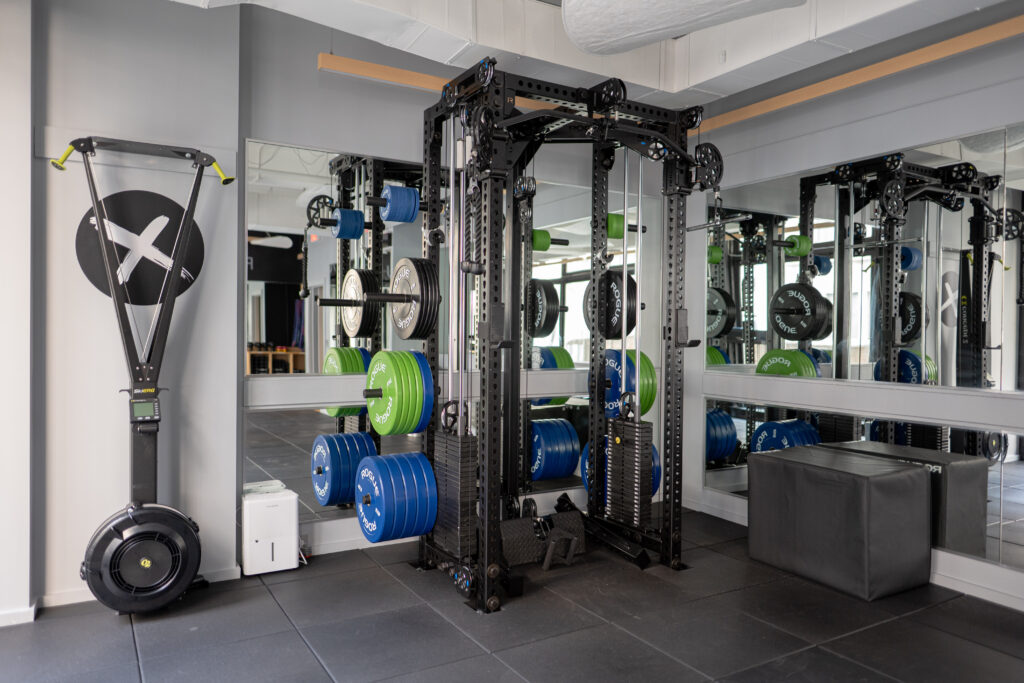
Instead of adapting to the space, the space is designed around how group training actually works.
That usually means:
- Consistent access to the same time slots
- A layout that supports structured sessions
- The ability to run your own programming
- An environment built for repeatability, not improvisation
You’re not working around general members, and you’re not delivering someone else’s class format.
You’re operating your own model—within a setup that supports it.
Why This Matters in Practice
When the environment aligns with how you coach:
- Sessions run more smoothly
- Clients experience consistency
- Your schedule becomes predictable
- It becomes easier to refine and improve what you do
Most of the friction trainers experience with group training comes from trying to create this consistency in spaces that weren’t designed for it.
Once that friction is removed, the focus shifts back to coaching.
How to Think About It
This isn’t about finding a “better gym.”
It’s about choosing a setup that supports a different way of operating.
For some trainers, that shift isn’t necessary.
But for those looking to build a structured group training model, it tends to be the point where things start to feel more stable—and easier to scale.
If that’s the direction you’re moving in, the next step isn’t more comparison—it’s deciding whether your current setup is actually supporting you.
Is This the Stage You’re At?
Not every personal trainer in NYC needs a dedicated group training setup.
But if you’ve read this far, there’s a good chance you’re no longer at the early stage.
This tends to apply when:
- You’ve already started running small group sessions
- You’re building consistent demand—but your setup feels limiting
- Your schedule is working, but harder to manage than it should be
- You’re thinking about scaling, but the environment isn’t quite supporting it
At that point, the question isn’t whether you can keep making your current setup work.
It’s whether it’s the right setup to build on.
For a while, most trainers can adapt.
They make the space work.
They adjust sessions.
They work around constraints.
But over time, that becomes harder to sustain.
And that’s usually the moment where the decision shifts—from finding somewhere to train, to choosing an environment that actually supports how you want to run your business.
What to Do Next
If you want to see what a purpose-built group training environment looks like in practice—and how independent coaches are running structured group sessions without the usual constraints—you can explore how Group by ITS works here:
Optional Next Step
If you’re still weighing up your options, it’s worth understanding how the cost side of this decision works before committing to a space:
→ What Does It Cost to Rent Gym Space in NYC as a Personal Trainer?
FAQ: Group Training Space in NYC for Personal Trainers
Where can personal trainers run group training in NYC?
Personal trainers can run group training in NYC within commercial gyms, boutique studios, or independent training facilities. However, most commercial gyms restrict group formats, and boutique studios require you to follow a fixed class structure. Independent group training environments tend to offer the most flexibility and consistency for running your own sessions.
Do gyms in NYC allow independent group training?
Some gyms in NYC allow independent group training, but it is often limited by space availability, policies, and member access. Many facilities prioritise general members or their own classes, which can make it difficult to run structured group sessions consistently. As a result, independent group training is usually easier to manage in environments specifically designed for it.
What do I need to run group training successfully?
To run group training successfully, you need more than just space—you need a consistent environment that supports how your sessions are structured. This includes reliable access to the same time slots, enough space for movement and flow, and the ability to run repeatable session formats. Without these elements, it becomes difficult to deliver a consistent client experience.
Is group training more profitable than one-to-one coaching?
Group training can be more profitable than one-to-one coaching, but only if it is delivered consistently and at scale. While revenue per session can increase, profitability depends on your ability to maintain structure, retain clients, and manage scheduling effectively. In many cases, the environment plays a key role in whether group training becomes financially sustainable.
Can I run my own group training program inside a boutique studio?
In most boutique or franchise studios, you cannot run your own independent group training program. These environments typically require you to follow their class format and programming, which limits your ability to build your own system. While they offer structure and consistency, they are not designed for independent coaches who want full control.
What is the biggest challenge when running group training in NYC?
The biggest challenge when running group training in NYC is maintaining consistency in an environment that isn’t designed for it. Limited access to space, scheduling conflicts, and lack of control over the setup can all affect how reliably sessions run. Over time, these issues make it harder to build a structured and scalable model.
How much space do I need to run group training sessions?
The amount of space required depends on your training style and group size, but the key factor is not just size—it’s how the space supports flow and structure. You need enough room to move between stations, manage transitions, and maintain a consistent layout. A well-designed smaller space often works better than a larger space that lacks structure.
Why does group training fail for many personal trainers?
Group training often fails not because of demand, but because of the environment it’s run in. When sessions are inconsistent, schedules are unstable, or the setup changes frequently, it becomes difficult to deliver a reliable experience. Most failures come from trying to build a structured model inside a space that wasn’t designed for it.