
Hi, I’m Rick Richey. I help personal trainers take control, grow their businesses, and thrive, backed by 20+ years of real-world experience.
Keep members coming back to your fitness classes isn’t about constantly creating new workouts or finding the latest training trend.
In my experience, people return because they enjoy the overall experience you create and because they feel they’re making progress in an environment where they feel comfortable, supported and valued.
Most instructors spend a lot of time thinking about how to attract new members.
That’s understandable because without people walking through the door, you don’t have a business. The question that receives far less attention is what happens after someone attends their first class.
Why do they come back?
Over the years, I’ve seen instructors with exceptional technical knowledge struggle to build long-term memberships, while others have full classes and waiting lists despite delivering sessions that, on paper, aren’t dramatically different.
The exercises might vary slightly, but that’s rarely what determines whether someone becomes a loyal member.
People expect good coaching. It’s one of the reasons they’ve chosen to attend your class in the first place.
What they remember, however, is how you made them feel. They remember whether they felt welcomed when they arrived, whether the coaching gave them confidence, whether someone noticed when they were missing and whether they left looking forward to coming back next week.
That’s why this guide isn’t about programming. It’s about the parts of your business that members experience before, during and after every class.
Those moments shape first impressions, build trust and create the kind of consistency that turns first-time visitors into long-term members.
If you can deliver that experience consistently, you’ll give people far more than a good workout. You’ll give them a reason to keep coming back.
Of course, before you can think about member retention, you first need to decide whether becoming an independent trainer is the right path for you. If you’re still at that stage, start with my guide Should You Become an Independent Personal Trainer?
Table of Contents
How to Keep Members Coming Back to Your Fitness Classes
If you’ve read my guide on Before You Launch Your First Fitness Class, you’ll know I believe every successful class starts with solving a genuine problem for a specific group of people.
Good programming is a big part of that. It gives your members confidence that they’re training safely and making progress towards their goals.
The reality, though, is that good programming is no longer a point of difference. Members expect it.
Most people won’t compare your session plan with another instructor’s or analyse whether your warm-up lasted six minutes instead of eight.
They assume that, as the professional, you’ll deliver a well-structured class that’s appropriate for their ability and helps them move towards the outcome they’ve signed up for.
Where classes begin to stand apart is everything that surrounds the workout.
It’s the welcome someone receives when they walk through the door for the first time. It’s whether you remember their name the following week. It’s how confidently you explain an exercise, how quickly you notice when someone needs an alternative, and whether every member leaves feeling like they were seen rather than simply counted.
Think about the businesses you return to in your own life. Whether it’s your favourite café, barber or physio, you probably don’t go back solely because of the product or service. You go back because you know what to expect, you feel comfortable there and the people make you feel valued.
Group fitness is no different.
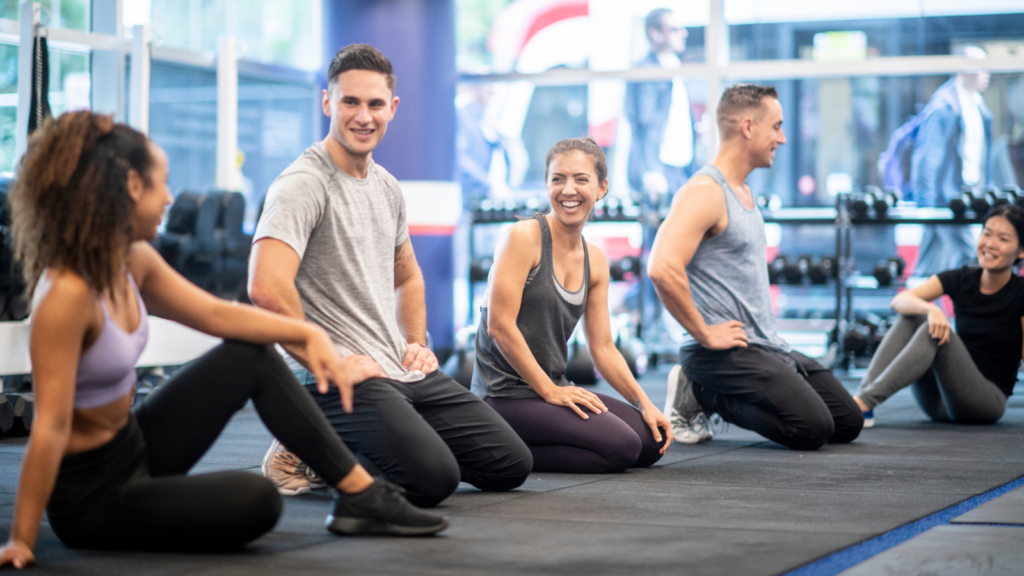
Your members may come because they want to get fitter, stronger or healthier, but they’ll often stay because they enjoy being part of something. They trust you, they know the other members, and attending your class becomes part of their weekly routine rather than another item on their to-do list.
That’s why great instructors don’t just deliver workouts. They create an experience that people genuinely look forward to repeating. When you understand that distinction, member retention becomes much less about constantly reinventing your programming and much more about consistently delivering an outstanding experience.
The First Impression Starts Before the Warm-Up
Many instructors think their first opportunity to impress a new member begins when the class starts. In reality, that first impression often begins days earlier.
It starts when someone books a class.
If the booking process is confusing, the confirmation email never arrives, or they’re left wondering what to bring or where to go, you’ve already introduced uncertainty before you’ve even met them.
On the other hand, a simple booking process followed by clear, friendly communication immediately reassures people that they’re in good hands.
Remember, attending a new fitness class can be intimidating.
Even experienced exercisers can feel nervous walking into an unfamiliar environment. They don’t know where to stand, whether they’ll know anyone, or whether they’ll be able to keep up.
Those thoughts are perfectly normal, and great instructors recognise that before the member ever steps through the door.
That’s why communication before the first class matters so much. A short welcome email, a confirmation message with practical information, or even a quick reminder that they’re looking forward to meeting them can remove much of that uncertainty.
Small touches like these don’t take long, but they demonstrate professionalism and help people arrive feeling more relaxed and confident.
The experience continues the moment they arrive.
Can they easily find the entrance? Is someone there to greet them? Do they know where to leave their belongings? Are they introduced to other members, or do they stand awkwardly in the corner waiting for the class to begin?
These moments may seem insignificant to you because you experience them every day. For someone attending their very first session, they’re often the moments they remember most.
One of the simplest habits I’ve seen from outstanding instructors is that they make every new member feel expected.
They greet them by name, take a few minutes to understand any injuries or concerns, explain how the class works and reassure them that they’ll look after them throughout the session. That conversation doesn’t need to be long, but it immediately builds trust.
People relax when they feel welcomed.
Once someone feels comfortable, they’re far more likely to listen, participate and enjoy the class. They’re also much more likely to come back because the experience matched or exceeded what they hoped it would be.
Before you’ve coached a single squat or corrected a single movement, you’ve already begun shaping your member’s opinion of your business. That’s why the first impression doesn’t start with the warm-up. It starts with every interaction that leads up to it.
The First Class Experience Journey™
A new member’s experience doesn’t begin when you press start on the warm-up. It begins with every interaction that leads up to that moment. Think of each step as an opportunity to build confidence, reduce uncertainty and reinforce that they’ve made the right decision.
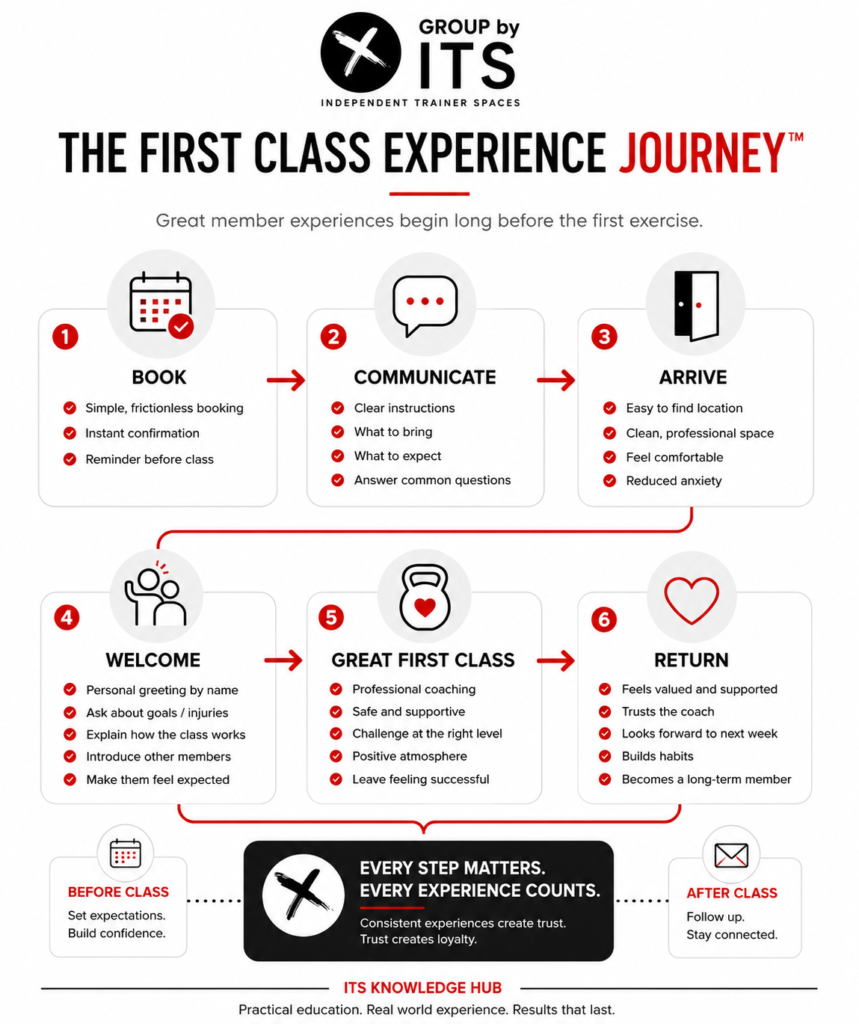
No single stage is complicated, but together they shape the way someone feels about your business. Get each step right consistently and you’ll create an experience that members remember long after they’ve finished their workout.
Professional Coaching Is More Than Counting Reps
It’s easy to think that coaching is about demonstrating exercises, counting repetitions and keeping the class moving. While those things are certainly part of the job, they’re only scratching the surface of what great coaching looks like.
Professional coaching starts with observation.
When you’re leading a class, you’re constantly taking in information. Is someone’s technique beginning to break down because they’re getting tired? Does a new member look uncertain about the next exercise? Has someone who’s usually energetic gone unusually quiet today? These are the details that separate simply running a class from genuinely coaching the people in front of you.
The best coaches don’t spend the entire session watching the timer. They’re watching their members.
That observation allows you to give coaching cues that are timely and relevant. Rather than repeating the same instruction to everyone, you can offer simple guidance that helps an individual move better, feel more confident or understand why they’re performing an exercise in a particular way.
Sometimes the smallest cue makes the biggest difference. A reminder to slow down, adjust their posture or control the movement can completely change how an exercise feels. Just as importantly, it shows members that you’re paying attention to them as individuals rather than simply leading a group through a workout.
Professional coaching also means recognising that not every exercise suits every person.
Every class will include people with different abilities, different goals and different training histories. Some may be returning after an injury, while others are exercising for the first time in years. Adapting an exercise isn’t lowering the standard of your class; it’s making sure every member can train safely and successfully at their own level.
Members notice this.
When someone realises they won’t be embarrassed because they need an alternative exercise, they’re far more likely to relax and trust your coaching. They stop worrying about whether they can keep up and start focusing on enjoying the session and making progress.
Safety sits at the heart of everything we do as coaches. That goes beyond correcting technique or checking equipment. It’s about creating an environment where people feel physically and psychologically comfortable. Members should feel confident asking questions, taking a break when they need to and working at an intensity that’s appropriate for them without feeling judged.
The final piece is education.
Great coaches don’t just tell people what to do; they help them understand why they’re doing it. A brief explanation of how an exercise supports a member’s goal, why a movement is being modified or what they’re trying to achieve during a particular block of the session adds value far beyond the workout itself.
People appreciate learning. It gives them confidence in your expertise and helps them become more engaged in their own progress.
Professional coaching isn’t something you master once and then stop learning. The best instructors continue developing their knowledge throughout their careers, which is why organisations such as the National Academy of Sports Medicine (NASM) place such a strong emphasis on continuing education for fitness professionals.
At the end of the day, your members probably won’t remember exactly how many repetitions they completed or the order of every exercise in the session. They will remember whether they felt supported, whether someone noticed their progress and whether they left believing they were in capable hands.
That’s what professional coaching looks like, and it’s one of the strongest reasons people choose to come back week after week.
Communication Creates Confidence

One of the easiest ways to improve the member experience has nothing to do with the exercises you choose. It’s simply communicating well.
Good communication helps people understand what to expect. Great communication makes them feel supported.
That starts before the class ever begins.
A confirmation email with the time, location and anything they need to bring removes unnecessary uncertainty. A reminder the day before can reassure someone who’s feeling nervous about attending for the first time. Even a short message saying you’re looking forward to meeting them helps create a personal connection before you’ve shaken hands.
Communication doesn’t stop once the class starts.
As a coach, you’re constantly giving information. You explain what the group is doing, demonstrate movements, offer coaching cues and encourage members as they work through the session. The clearer your instructions, the more confident people become. They spend less time wondering what they’re supposed to be doing and more time concentrating on moving well and enjoying the class.
That doesn’t mean talking constantly.
Some of the best coaches know when to speak and when to let the session flow. They choose their words carefully, give clear instructions and avoid overwhelming members with too much information at once. A few well-timed coaching cues are often far more effective than a running commentary throughout the entire workout.
Communication continues after the class has finished as well.
A simple “Well done today” as members leave, checking in with someone who struggled during the session or following up with a new member to ask how they found their first class all reinforce that they’re more than just another booking in your diary.
The same applies when someone stops attending.
If a regular member misses a week or two, reaching out isn’t about applying pressure or making them feel guilty. It’s about showing that you’ve noticed they’re missing and that you genuinely care about their progress. Sometimes a quick message asking if everything’s okay is enough to encourage someone to return before a short absence becomes a permanent one.
Good communication also builds trust because it creates consistency.
Members know they’ll receive clear instructions, honest feedback and support whenever they need it. They know they can ask questions without feeling embarrassed and that someone is paying attention to how they’re getting on. That confidence makes people feel comfortable, and comfortable members are much more likely to stay.
At its heart, communication is simply another form of coaching. Every conversation, every email and every encouraging word helps shape how people feel about your business. When members feel informed, supported and valued, they’re not just more likely to enjoy today’s class—they’re much more likely to book the next one too.
People Return Because They Feel They Belong
If you ask members why they first joined a fitness class, you’ll probably hear a familiar list of reasons.
They wanted to get fitter, lose weight, build strength or improve their health. Those goals are often what encourage someone to take that first step through the door.
Ask long-term members why they’ve stayed, and the answers are often very different.
They’ll tell you they enjoy seeing familiar faces each week. They’ll mention the friendships they’ve built, the encouragement they receive from other members and the fact that the class has become part of their routine. Many will say they simply enjoy being there.
That’s the power of community.
As coaches, it’s easy to focus on programming because that’s what we’ve spent years learning.
Yet one of the strongest reasons people continue attending has very little to do with the workout itself. People like feeling that they’re part of something bigger than themselves.
Creating that sense of belonging doesn’t happen by accident. It comes from lots of small, deliberate actions repeated consistently over time.
It starts with something as simple as learning people’s names.
There’s something powerful about being greeted by name when you walk into a room. It tells someone they’ve been noticed. It tells them they’re expected. It immediately makes the experience feel more personal than simply being another participant in a class.
The same applies to introductions.
When a new member arrives, don’t assume they’ll naturally settle in. Introduce them to a couple of regular members before the session begins.
Those small introductions remove much of the awkwardness that comes with walking into an unfamiliar group and make it far easier for someone to feel comfortable from their very first visit.
As the weeks go by, look for opportunities to celebrate progress.
That doesn’t always mean dramatic transformations or personal bests. It might be acknowledging someone who’s attended consistently for a month, congratulating a member for mastering a movement they’ve struggled with or simply recognising the effort they’ve put in despite a busy week.
People like to know their efforts have been noticed.
One of the things I’ve always loved about group fitness is watching friendships develop naturally. Members begin arriving a little earlier to catch up. They stay behind after class for a coffee. They encourage each other through difficult workouts and celebrate one another’s successes.
Before long, your class becomes more than somewhere people exercise. It becomes somewhere they genuinely enjoy spending time.
As a coach, you can help create the conditions for those relationships to grow.
Encourage conversation before the class starts. Pair people up occasionally instead of always letting them choose. Celebrate birthdays, milestones and achievements where appropriate. Create opportunities for members to connect outside the workout, whether that’s through a social event, a charity challenge or simply chatting for a few minutes after class.
None of these things require a large budget or months of planning. They simply require intention.
When members feel connected to the people around them, leaving becomes much harder. They’re no longer deciding whether to attend another workout; they’re deciding whether to miss seeing friends, supporting the group and being part of a community they’ve grown to value.
That’s why community is one of the most powerful retention tools you’ll ever have. Workouts can be copied. Equipment can be upgraded. Prices can be matched. But a genuine sense of belonging is incredibly difficult to replicate.
People may arrive because of the programme you offer, but they’ll often stay because of the people they share it with. And when your class reaches that point, you’ve built something far more valuable than a timetable full of sessions. You’ve built a community that people genuinely want to be part of.
Consistency Builds Trust
Most people don’t enjoy surprises when it comes to their fitness.
They want to know when the class starts, what the session will feel like, who’ll be coaching them and that they’ll receive the same level of attention every time they walk through the door. That sense of familiarity allows people to relax and focus on their training rather than wondering what’s going to happen next.
Consistency isn’t about making every class identical.
Your programming should evolve, your sessions should remain engaging and your members should continue to be challenged. What stays consistent is the quality of the experience.
A member should know they’ll be welcomed when they arrive. They should expect clear coaching, thoughtful progressions and an environment where they feel supported regardless of their ability. Whether it’s their second class or their two hundredth, the standard of care should feel the same.
That’s where good systems make such a difference.
The word “systems” sometimes sounds overly corporate, but in reality they’re simply the routines that help you deliver a consistently high standard. Greeting new members before class, checking in with someone returning from injury, following up after a first session or recognising regular attendance are all examples of systems. They don’t remove the personal touch—they make it easier to deliver it consistently.
Without those routines, the member experience often depends on how busy you are or how you’re feeling that day. Some classes are outstanding, while others feel rushed because you’re trying to juggle too many things at once.
Members notice inconsistency far more quickly than consistency.
They notice when a coach seems distracted. They notice when communication suddenly stops or when a new member receives a completely different experience from someone who joined the week before. None of these moments seem particularly significant on their own, but over time they begin to influence how people feel about your business.
Consistency also builds confidence.
When members know they’ll receive the same level of coaching, encouragement and professionalism every time they attend, trust develops naturally. They stop wondering whether today’s class will be worthwhile because previous experiences have already answered that question.
That’s one of the reasons successful coaching businesses continue to grow. Members recommend them because they know exactly what they’re recommending. Friends, family and colleagues can attend with confidence because the experience is dependable, not occasional.
At the end of the day, trust isn’t built through one exceptional class. It’s built through dozens of consistently good ones. Every session reinforces the promise you’ve made to your members, and over time that reliability becomes one of the strongest reasons they continue coming back.
Consistently retaining members doesn’t just create a better experience for the people you coach—it creates a more sustainable business for you as well. If you’re wondering how many members you actually need to build a profitable independent fitness business, my guide How Many Clients Do You Need to Be Profitable? explains how to calculate the numbers.
Accountability Keeps People Showing Up

One of the biggest misconceptions in fitness is that people need to feel motivated before they’ll attend a class.
The reality is that motivation comes and goes.
Everyone has days when they feel energised and ready to train. They also have days when work has been stressful, the weather is miserable or they’d simply rather stay at home. That’s perfectly normal. If attendance depended entirely on motivation, very few people would exercise consistently.
This is where accountability becomes so important.
Good coaches understand that their role isn’t simply to deliver a great workout. It’s also to help members build habits that support their long-term goals. Sometimes that means encouraging someone who’s having a difficult week. Sometimes it means checking in with a member you haven’t seen for a while. Often, it’s simply reminding people why they started in the first place.
Accountability doesn’t have to feel formal or uncomfortable.
It can be as simple as saying, “See you on Thursday,” at the end of class. If someone misses a session, send them a quick message asking if everything’s okay. When they return, welcome them back without making them feel guilty for being away.
Those small conversations tell people that their attendance matters.
The strongest accountability often comes from the group itself.
When members know their coach will notice if they’re missing, they’re more likely to attend. When they know their training partner will ask where they were, that creates another reason to show up. Over time, accountability becomes part of the culture rather than something the coach has to enforce.
It’s also important to remember that accountability should always feel supportive, never controlling.
People don’t want to feel pressured into attending. They want to know that someone genuinely cares about their progress and wants to help them succeed. There’s a big difference between sending a message that makes someone feel guilty and sending one that reminds them they’re valued.
I’ve found that the most successful coaches create an environment where members want to stay consistent because they know someone is invested in their success. They don’t rely on constant motivation or dramatic speeches. They build relationships, set clear expectations and encourage people to keep turning up, even on the days they don’t particularly feel like it.
Ironically, those are often the sessions members are most grateful they attended.
Fitness results rarely come from one exceptional workout. They come from showing up consistently over weeks, months and years. Accountability helps bridge the gap between good intentions and lasting habits, and that’s one of the greatest gifts a coach can give their members.
The Experience Is the Product
It’s easy to believe that people pay to attend your classes because of the exercises you programme each week.
Of course, the workout matters. Members expect sessions that are safe, well structured and appropriate for their goals. That’s the foundation of any successful coaching business.
But if you ask yourself what people actually remember a few days later, it’s rarely the order of the exercises or exactly how many repetitions they completed.
They remember how the class made them feel.
They remember whether they felt welcomed when they arrived. They remember whether they were encouraged when they were struggling, whether someone noticed the progress they’d made and whether they left feeling better than when they walked through the door.
That’s the experience.
Think about the businesses you recommend to friends and family. Most of the time, you’re not describing every detail of the product or service. You’re describing how you were treated, how easy everything was and how confident you felt throughout the experience.
Group fitness is no different.
Every interaction contributes to how members perceive your business. The booking process, the welcome they receive, the quality of your coaching, the atmosphere in the room, the conversations before and after class and the relationships they build with other members all become part of the product you’re delivering.
That’s why two classes with very similar programming can produce completely different outcomes.
One feels transactional. People arrive, exercise and leave.
The other feels personal. Members feel recognised, supported and connected. They leave with more confidence than when they arrived, and they look forward to returning the following week.
The exercises may have been almost identical, but the experience couldn’t have been more different.
As an independent coach, that’s one of the greatest opportunities you have.
Large commercial gyms can invest in more equipment, bigger facilities and larger marketing budgets, but it’s much harder for them to consistently deliver the personal experience that an outstanding independent coach can create. Knowing your members by name, understanding their goals, celebrating their progress and building a genuine sense of community are advantages that can’t easily be copied.
When you stop thinking of yourself as someone who simply delivers workouts and start thinking of yourself as someone who creates exceptional experiences, the way you coach begins to change.
You pay more attention to the details. You become more intentional about every interaction. You realise that every class is another opportunity to strengthen the trust your members have placed in you.
In the end, members won’t stay because Tuesday’s workout was slightly better than last Thursday’s.
They’ll stay because every time they walk through your door, they know they’ll be welcomed, supported, challenged and leave feeling better than they did when they arrived.
That’s the product they’ll remember. And that’s the experience they’ll keep coming back for.
The Five Elements of an Outstanding Class Experience™
By this point, you can probably see a common thread running through everything we’ve covered.
Outstanding classes aren’t built around one particularly good workout. They’re built by delivering a high-quality experience consistently, every time someone attends.
Over the years, I’ve found that the classes members stay with the longest tend to share the same five elements. They may look very different on the surface, but the experience is usually shaped by the quality of the coaching, the communication, the sense of community, the consistency and the accountability members receive.
Together, these make up The Five Elements of an Outstanding Class Experience™.
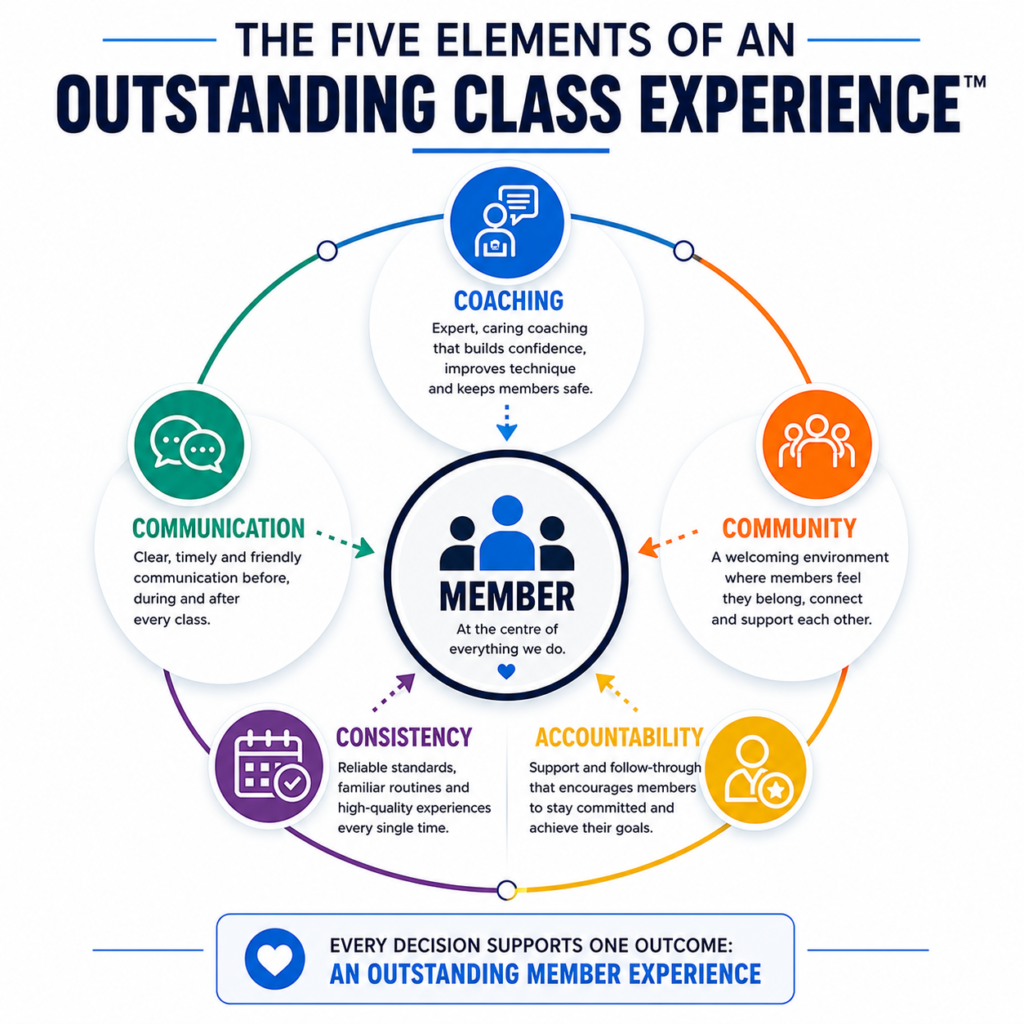
Each element contributes something different.
Professional coaching builds confidence, improves technique and helps members train safely. Clear, timely communication removes uncertainty and helps people understand what to expect before, during and after each class. Community creates an environment where members feel they belong, connect with one another and offer support.
Consistency gives people reliable standards, familiar routines and a high-quality experience each time they attend. Accountability provides the support and follow-through that helps members stay committed long enough to make meaningful progress.
At the centre of all five elements is the person who matters most: the member.
That matters because these elements aren’t separate tasks to complete or boxes to tick. They should all work together to shape the way someone feels about your class and your business.
When the member remains at the centre of your decisions, you naturally begin to pay closer attention to the details that influence their experience. You think more carefully about how people are welcomed, how they’re coached, how you communicate and how you help them stay engaged.
None of this requires expensive equipment, a large facility or a substantial marketing budget. It depends far more on the standards you set and the care you bring to each interaction.
Every decision should support one outcome: an outstanding member experience.
Strengthen these five elements and you’ll create more than a timetable of well-programmed classes. You’ll create an experience that members trust, value and genuinely look forward to returning to each week.
Rick’s Perspective
Over the years, I’ve coached thousands of group fitness sessions, worked alongside some excellent instructors and watched plenty of classes grow from just a handful of members into thriving communities.
I’ve also seen good coaches struggle to retain members, not because they lacked knowledge, but because they underestimated the small things that influence whether people come back.
Here are five lessons I’ve learned along the way.
1. Members notice far more than you think
As coaches, we naturally focus on the session plan. We’re thinking about timings, coaching points and making sure everything runs smoothly.
Your members are paying attention to something different.
They notice whether you remembered their name. They notice if you asked how their knee was after last week’s session. They notice whether you smiled when they walked through the door or simply carried on setting up equipment.
None of those things appear on a programme, but they all become part of the experience your members remember.
2. Small improvements are worth celebrating
It’s easy to wait until someone achieves a major milestone before recognising their progress.
In reality, most members make progress in much smaller ways.
Someone completes an exercise they couldn’t manage a month ago. Someone attends consistently despite a demanding job. Someone feels more confident walking into the room than they did when they first joined.
Those moments deserve to be recognised.
When people feel their progress has been noticed, they begin to believe they’re moving in the right direction, even when the changes aren’t obvious yet.
3. Your regulars help shape the culture
Every class has a few members who naturally make new people feel welcome.
They introduce themselves, encourage others during the workout and help create the atmosphere you want your class to have.
Look after those people.
Thank them. Include them. Give them opportunities to help new members settle in.
The strongest communities are rarely built by the coach alone.
4. Don’t wait until someone disappears
One mistake I see quite often is only contacting members after they’ve stopped coming altogether.
By that stage, they’ve usually drifted away for several weeks, and returning can feel awkward.
It’s much easier to keep someone engaged than it is to win them back.
If a regular member misses a couple of classes, send them a quick message. Not to sell them anything or make them feel guilty—simply to check they’re okay and let them know they’ve been missed.
People appreciate knowing that somebody noticed.
5. Never forget what it’s like to be new
No matter how experienced you become as a coach, try to remember how your first class felt.
Most new members walk through the door carrying a degree of uncertainty. They wonder whether they’ll fit in, whether they’ll be able to keep up and whether everyone else knows something they don’t.
The best instructors never lose sight of that.
They don’t assume confidence; they build it.
When you consistently help new members feel comfortable, supported and included from day one, you’ve already taken one of the biggest steps towards building a class that people want to stay with.
At the end of the day, member retention isn’t usually determined by one extraordinary class or one perfect coaching session.
It’s built through hundreds of small interactions that make people feel welcome, supported and valued every time they attend.
Get those moments right consistently, and you’ll create something far more powerful than a popular fitness class.
You’ll create a place where people genuinely feel they belong.
Member Experience Checklist™
Creating an outstanding class experience doesn’t happen by chance. It comes from paying attention to the small details that shape how people feel before, during and after every session.
Use this checklist to review your own classes. You don’t need to answer “yes” to every question straight away, but each one is an opportunity to improve the experience you deliver to your members.
Before the Class
☐ Is it easy for someone to book their first class?
☐ Do new members receive clear information before they arrive?
☐ Do they know where to go, what to bring and what to expect?
☐ Would a first-time visitor feel confident walking through your door?
During the Class
☐ Does every new member receive a personal welcome?
☐ Do you learn and use members’ names?
☐ Are exercises adapted confidently for different abilities?
☐ Does every member receive individual coaching or encouragement?
☐ Is the atmosphere supportive rather than intimidating?
☐ Do people understand why they’re doing each exercise, not just how?
Building Community
☐ Are new members introduced to other people in the class?
☐ Do members naturally interact before or after sessions?
☐ Are milestones and achievements recognised?
☐ Do people genuinely look like they enjoy being there?
After the Class
☐ Do members leave knowing they’ve done well?
☐ Do you follow up with first-time attendees?
☐ Do you notice when regular members stop attending?
☐ Do members know you’ll support them outside the class as well as during it?
Your Score
16–18 ✓ Outstanding
You’re creating far more than a workout. Your members are likely to feel welcomed, supported and part of a community that encourages them to keep coming back.
12–15 ✓ Strong Foundation
You’re doing many things well, but there are probably a few areas where small improvements could make a noticeable difference to the overall member experience.
8–11 ✓ Opportunities to Improve
Your coaching may already be strong, but there are likely to be gaps in communication, consistency or community that could affect long-term retention.
0–7 ✓ Start with the Basics
Don’t try to improve everything at once. Focus on creating a consistently positive first impression, welcoming every member personally and building relationships one class at a time.
What Separates an Average Class from an Outstanding One
Two classes can use similar exercises, follow a similar structure and last the same amount of time, yet leave members with completely different impressions.
The difference usually lies in how the experience is delivered.
| Area | Average Class | Outstanding Class |
| Greeting | Members arrive, find their own place and wait for the session to begin. | Members are greeted by name, made to feel expected and welcomed before the class even starts. |
| Coaching | The instructor leads the workout and gives general instructions to the group. | The coach observes individuals, adapts exercises, provides relevant coaching cues and helps every member succeed. |
| Communication | Members receive the information they need to complete the session. | Members receive clear, personal communication before, during and after class, so they always know what to expect. |
| Atmosphere | The room feels functional. People arrive, exercise and leave. | The room feels welcoming, encouraging and supportive, making members want to come back. |
| Follow-up | Members are contacted only when there’s a problem or they stop attending. | New members are checked in with, progress is recognised and unexplained absences are noticed early. |
| Community | Members attend the same class but have little connection with one another. | Members know each other, new people are introduced and genuine friendships develop over time. |
| Member Retention | People stay while the class remains convenient. | People stay because they trust the coach, value the experience and feel part of something they would genuinely miss. |
An average class can still deliver a perfectly good workout. The difference is that an outstanding class gives members more reasons to return than the workout alone.
That does not mean every interaction needs to be elaborate or that the instructor must manufacture excitement. It means being deliberate about the details that help people feel comfortable, supported and valued.
When those details are delivered consistently, the class becomes harder to replace. Members are no longer comparing exercise programmes or prices in isolation. They are deciding whether they want to leave a coach they trust, a routine they value and a group of people they enjoy seeing each week.
Frequently Asked Questions
Why do members stop attending fitness classes?
Members rarely stop attending because of a single workout. More often, they leave because they no longer feel connected, supported or motivated to keep coming. Poor communication, inconsistent coaching, a lack of accountability and feeling like “just another member” all contribute to declining attendance. Creating a welcoming, consistent experience gives people more reasons to return each week.
What keeps members coming back to fitness classes?
Members come back because they enjoy the overall experience, not just the workout. Professional coaching, clear communication, a supportive community, consistent standards and genuine accountability all help people feel confident, valued and connected. When members trust their coach and feel they belong, regular attendance becomes part of their routine rather than another item on their to-do list.
What makes a great group fitness instructor?
A great group fitness instructor does far more than lead exercises. They observe members carefully, adapt movements when needed, communicate clearly and create an environment where people feel safe, supported and encouraged. They also build relationships, remember names and help every member feel like they belong, regardless of their experience or ability.
How can I improve member retention in my fitness business?
Improving member retention starts by focusing on the member experience. Make it easy for people to join, welcome them personally, provide high-quality coaching, communicate regularly and notice when someone stops attending. Small improvements delivered consistently often have a greater impact on retention than constantly changing your programming.
How do I build a stronger community in my fitness classes?
Community develops through consistent interactions rather than organised events alone. Learn members’ names, introduce new people to the group, celebrate progress and encourage conversations before and after class. When members build relationships with both you and each other, they become far more likely to stay engaged over the long term.
Is coaching more important than programing?
Both matter, but they serve different purposes. Good programing helps members train safely and make progress, while great coaching brings that programme to life. Observation, coaching cues, encouragement and adapting exercises to individual needs create a better experience and help members feel supported throughout their fitness journey.
How important is communication in group fitness?
Communication helps members feel informed and confident before, during and after every class. Clear booking information, simple coaching instructions and thoughtful follow-up all reduce uncertainty and strengthen trust. Good communication also helps members feel noticed, which plays an important role in long-term retention.
What’s the most important factor in creating an outstanding class experience?
There isn’t a single factor. Outstanding class experiences are created through a combination of professional coaching, clear communication, a genuine sense of community, consistent delivery and supportive accountability. When these elements work together, members feel valued, make progress and develop confidence in both their coach and the class itself.
Members Come Back Because They Belong
Members don’t come back simply because they enjoyed today’s workout.
They come back because they trust the coach, feel comfortable in the room and know they’ll be welcomed when they return. They come back because people notice when they’re there, recognise when they’ve made progress and care when they disappear.
Most members can find another workout. What is much harder to replace is the feeling that they have found the right place for them.
That sense of belonging isn’t created through one exceptional class. It develops through the small details you repeat every week: learning someone’s name, offering the right encouragement, adapting an exercise when needed, checking in after an absence and helping each person leave feeling that they achieved something.
Get those details right consistently and you’ll create more than a class people enjoy attending. You’ll create a place they value being part of.
Because, ultimately, members don’t stay simply because the programming is good.
They stay because they believe this is where they belong.
How Does Your Member Experience Measure Up?
Use the Member Experience Checklist™ to review what happens before, during and after each class, identify any gaps and find practical ways to give members more reasons to return.
[Download the Member Experience Checklist™]
Thinking About Building Your Own Classes?
If you’re ready to move beyond coaching someone else’s timetable and begin building classes of your own, Group by ITS gives independent fitness professionals the space and support to get started.